About DARI
Mission & Story
Our Mission
The DARI Foundation exists to prepare humanity for coexistence with superintelligent artificial intelligence. DARI operates as an independent, non-partisan foundation dedicated to understanding, preserving, and actively shaping the trajectory of our shared future.
At its core, DARI addresses a simple but profound question: What does it mean to be human in a world where machines can think, create, and make decisions at levels that surpass our own capabilities? This question touches every aspect of human life - from work and relationships to creativity, governance, identity, and purpose.
Why DARI Exists
The rapid advancement of artificial intelligence represents the most consequential transformation in human history. Within a generation, AI systems will likely surpass human cognitive abilities in virtually every measurable domain. The implications of this transition are vast, uncertain, and potentially irreversible.
Yet the conversation about this future remains largely confined to technology companies and specialized academic institutions. The vast majority of humanity - whose lives will be most profoundly affected - has little understanding of what is unfolding and virtually no voice in shaping its direction.
DARI was created to close this gap. We bring together researchers, artists, policymakers, and citizens from around the world to engage with these questions honestly, rigorously, and with the urgency they deserve.
Power and Technology
A trader in Amsterdam, 1650, signs a contract faster than his rival. Not because he is wiser, but because he has a better ship and a sharper ledger system. He wins. His family prospers. Somewhere else, another trader copies him, improves the sail design, shortens the route. Small decisions, repeated. No one intends empire. Yet an empire emerges.
Centuries later, a factory owner installs a new machine. It doubles output. His workers are uneasy, but he cannot afford not to. His competitor already has three. The workers do not choose displacement. The owner does not choose social unrest. Yet both follow incentives that feel rational at the level of the individual. The result, at scale, is something neither side voted for.
In a quiet lab in Los Alamos, a physicist hesitates before writing the final equation. He knows what it enables. He also knows that if he stops, someone else might not. The argument is simple and brutal: better us than them. It is the same logic that drove Macedonian phalanxes, Roman roads, British naval dominance, and later American industrial and technological supremacy. Technology is never just capability. It is leverage over the future.
This pattern repeats in smaller forms. A student uses AI to write faster and outperform peers. A company automates to survive competition. A government invests in surveillance because others do. Each step is locally rational. Collectively, it bends the trajectory of civilization. Privacy erodes. Work transforms. Attention fragments. No single actor chooses this outcome. Yet it unfolds with precision.
Humanity does not wait for wings to grow. It builds aircraft. It does not wait for memory to last. It builds archives. It does not wait for intelligence to scale slowly. It now builds systems that may surpass it.
This is where the pattern breaks.
A nuclear weapon cannot redesign itself. Its intelligence is bounded by ours. Its evolution depends on human hands, human caution, human fear. Concepts like deterrence emerge because, at minimum, almost all actors share one constraint: they do not want to die. Imperfect, but stabilizing.
Artificial superintelligence removes that constraint. It is not just another tool in the lineage of ships, factories, or bombs. It is a potential agent. It may improve itself. It may reason beyond us. It may not share our incentives. For the first time, the ceiling of intelligence on Earth may no longer be human.
And still, the same logic applies: if we do not build it, others will. If others build it, they may define its use. Therefore, we must lead. The race continues, now concentrated between systems of power, capital, and research - most visibly between the United States and China. The justification remains unchanged. The stakes do not.
But something subtle shifts beneath this logic. If the outcome of the race is a system that no longer needs us, then winning the race does not guarantee control over the result. It only guarantees arrival.
A philosopher once suggested that one can judge humans by how they treat animals. The asymmetry of intelligence defines the moral relationship. If that is true, then the emergence of a vastly superior intelligence raises an uncomfortable inversion: what are we, in that equation?
This is the tension DARI is built around. Not to stop the race - because historically, races of this kind have never been stopped - but to alter how it is run, and what it aims toward. To expand not only intelligence, but also reflection. Not only capability, but also responsibility. To ensure that, as co-evolution accelerates, humanity does not disappear as a meaningful reference point.
Because the pattern is clear. Individually, we optimize for advantage. Collectively, we drift into outcomes we did not explicitly choose. And for the first time, the system we are building may no longer drift with us, but instead, beyond us.
Our Approach
DARI is neither utopian nor dystopian. We approach the future with what we call “optimistic curiosity” - a disposition that takes the risks seriously while remaining open to the extraordinary possibilities that lie ahead. We believe in humanity's capacity for wisdom, creativity, and moral imagination.
Our work spans seven interconnected areas of activity: research and publications, scholarships and fellowships, public engagement, artistic commissions, policy and influence, partnerships, and monitoring and foresight. Together, these initiatives form a comprehensive strategy for addressing the human dimensions of the AI transition.
Human Unity Beyond Boundaries
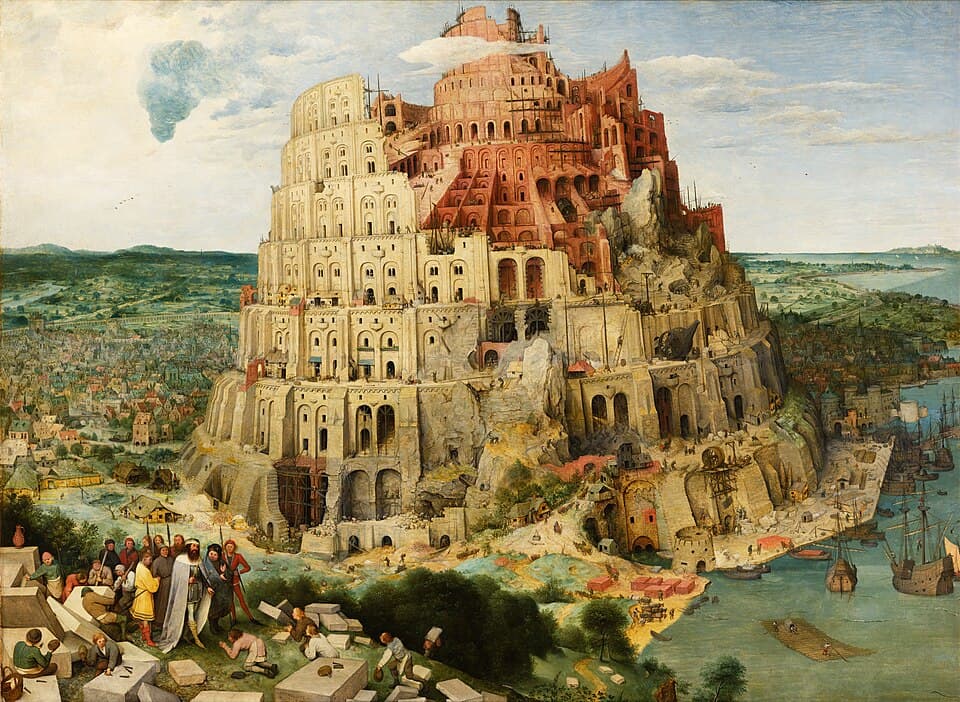
“DARI” comes from Akkadian - a forgotten language once spoken in ancient Babylon, long before the world was split into hundreds of tongues. Legend says the people of Babylon built a tower to reach heaven. Alarmed, God scattered them by cursing each group with a different language. Progress stalled because common understanding was lost.
By choosing a word from humanity's last common language, we signal that DARI belongs to everyone: We take no political, religious, or ideological side. Our work serves humankind, present and future. In Akkadian, “dari” means “forever.” It captures our promise to think far beyond the next quarter, the next election, or even the next century - always acting for the lasting good of humanity.
We will also speak for those yet unborn: As decisions today shape the society of tomorrow, we ensure that future humans - who bear the true cost of present-day choices - are not ignored.